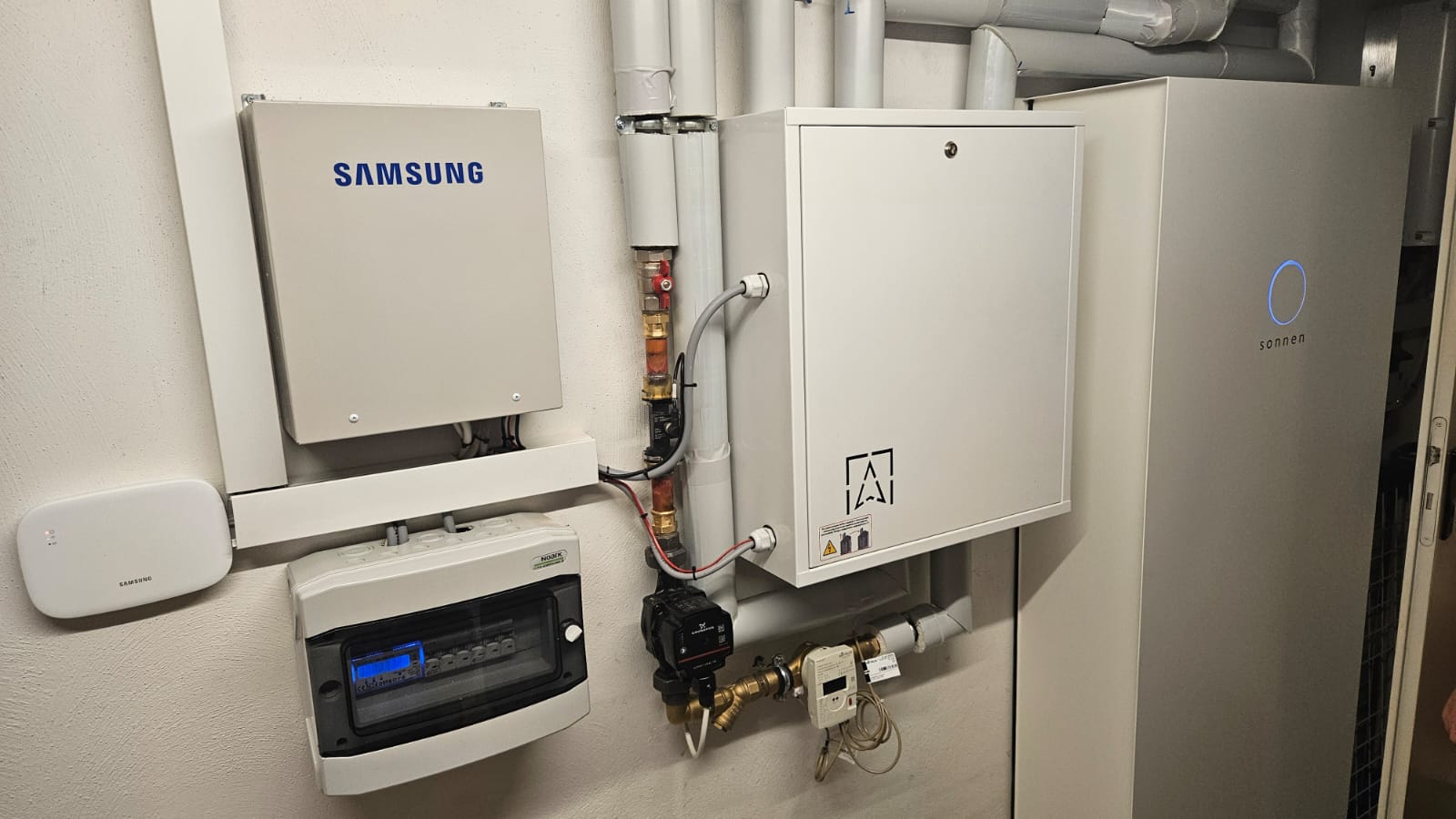
In 2025, sustainability is more than just a trend—it is a necessity. With rising energy prices and increasingly stringent EU regulations, homeowners are looking for ways to lower their bills and protect the environment. What if I told you that you could achieve all of this through two technologies: photovoltaics and heat pumps? In this article, we explain how these solutions work together to create a net-zero home—one that produces more energy than it consumes. As specialists in photovoltaics and heat pumps, we share practical tips so you can move forward with your investment today.
What is a net-zero home and why is it worth having?
A net-zero home (or nearly zero-energy building) is a structure where energy from renewable sources balances out its consumption. In Poland, thanks to programs like “Mój Prąd” or “Czyste Powietrze,” investing in such solutions pays off within just a few years. Here are the key benefits:
- Financial savings: Electricity and heating bills can drop by as much as 70-80%. In 2026, energy prices may rise by another 10-15%, making these installations even more profitable.
- Ecology: You reduce CO2 emissions by hundreds of kilograms per year, supporting EU climate goals.
- Energy independence: Independence from suppliers and protection against blackouts.
- Increased property value: A home equipped with PV and a heat pump can be worth significantly more on the market.
Imagine: in the summer, your photovoltaic panels produce surplus energy that you store or sell back to the grid. In the winter, the heat pump uses that energy for heating—without gas or coal.
Photovoltaics: the heart of your energy system
Photovoltaics is an installation of solar panels that convert sunlight into electricity. In Poland, an average single-family home requires 5-10 kWp (kilowatts peak), which covers the electricity needs of a family of four.
How does it work and how much does it cost?
- Installation: Panels are mounted on the roof or on the ground. Modern photovoltaic modules reach efficiencies of 20-22%.
- Cost in 2025: Varies depending on power and component quality, with the possibility of achieving significant savings through subsidies (up to 50% reimbursement).
- Return on Investment: A few years, thanks to selling surpluses back to the grid (net-billing system).
Expert Tip: Choose an installation with energy storage (LiFePO4 batteries). This will allow you to fully utilize your energy on cloudy days and during the evening hours.
Heat pumps: smart heating with zero emissions
A heat pump is a device that “extracts” heat from the air, ground, or water and transfers it into your home. When combined with photovoltaics, it significantly reduces electricity bills—the panels provide the energy needed for its operation, especially during the summer season, while summer surpluses (stored in batteries or settled via net-billing) help balance the demand in winter when PV production is lower.
Types and Advantages:
- Air-source: The most popular and easiest to install. The COP (Coefficient of Performance) reaches up to 4-5, meaning 1 kW of electricity yields 4-5 kW of heat.
- Ground-source: More stable—ideal for larger homes.
- Cost: Depends on the type and power, with subsidies covering up to 70% (through the “Czyste Powietrze” program).
Example: In a 120 m2 house, a heat pump + PV system significantly lowers annual heating costs compared to traditional sources, requiring only minimal grid support during the peak of winter!
Synergy: How to combine photovoltaics with a heat pump?
This is where the magic happens! Photovoltaics produce the electricity that powers the heat pump—while accounting for seasonal fluctuations: in summer, surpluses cover the demand, and in winter, the system relies on energy storage and grid settlements. Here is how to implement it step-by-step:
- Energy Audit: Assess your home’s requirements. At AmiPV, we offer a free preliminary audit.
- Sizing the System: PV for electricity and cooking (5-7 kWp), and a pump for heating (8-12 kW).
- Integration: Use a hybrid inverter and a controller so the system operates automatically, prioritizing energy from the PV panels.
- Financing: Take advantage of the thermo-modernization tax relief (tax deduction) and local subsidies.
Challenges and how to overcome them
Not everything is perfect—the weather in Poland can be unpredictable, and installations require maintenance. Solutions:
- Winter: Heat pumps operate effectively down to -25°C; add a heat buffer for safety, while energy storage balances the lower PV production.
- Maintenance: An annual inspection extends the system’s lifespan up to 25 years.
- Barriers: If you own an older home, start with thermo-modernization (insulation, windows)—this increases efficiency by 30%.
Time for your step towards net-zero
In 2025, photovoltaics and heat pumps are not a luxury, but a smart investment. Together, they create a system that not only saves money but builds a future for your family and the planet. Ready for a change? Contact us—we will help with selection, installation, and all the paperwork. Email us at: biuro@amipv.pl Call us: +48 730 178 030
Article prepared by AmiPV – Your partner in green energy.